Thinking about putting in a rainwater tank? Plenty of North Shore households already have. A tank cuts mains water use on the garden, the laundry and the toilet. It also holds something in reserve when restrictions come around. Rainwater tanks North Shore properties can genuinely use come down to three things. Roof area, tank size, and what the water will feed. Sweeney’s Plumbing settles all three before anything goes in the ground.
Why put a rainwater tank on a North Shore property?
Saving money is a big drawcard, but the benefits go beyond that. A rainwater tank can supply water for your garden, laundry, toilets, and depending on your setup, even the whole house. It’s a great way to reduce your environmental impact while gaining some independence from the mains system.
What can the water actually be used for?
Garden, laundry and toilet at minimum. The whole house, where the tank is big enough. Each use asks for a different level of water quality. A garden tap needs almost none. A toilet or washing machine needs water that is clear and free of odour. Drinking water sets the highest bar. NSW Health advises urban households to stay on the mains supply for drinking and cooking.
What size tank does the property need?
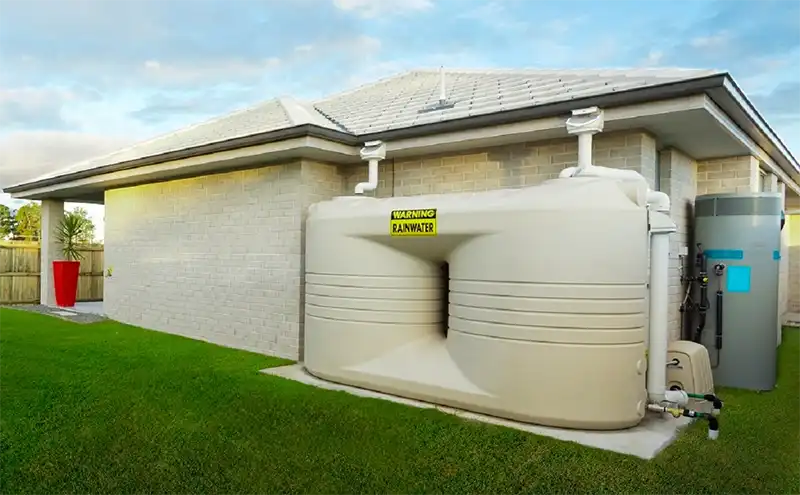
Every property is different, so we’ll help you choose the right style and size to suit your space and usage. Maybe a slimline tank is best for that narrow side path, or a round tank fits nicely out the back. If you’re low on space, an underground tank might be ideal.
How much water will the roof collect?
More than most people guess. The Australian Government’s YourHome guide to rainwater gives the sum. One millimetre of rain on one square metre of roof yields one litre of water. It suggests 2,000 to 3,000 litres of storage for a four-person household using tank water on the garden and toilet. Make that 5,000 to 20,000 litres where the tank supplies the house. Gutters and downpipes have to be in good order for any of it to arrive, so poor roof and stormwater drainage is worth sorting first.
What is involved in getting a tank installed?
Installing a tank is more involved than just dropping it in your yard. There’s planning, plumbing, and council compliance to consider. That’s where our licensed team comes in. We’ll:
- Assess your roof and gutters for water collection
- Recommend the best tank placement
- Connect the tank to your plumbing if needed
- Install first-flush diverters and filters to keep your water clean
Who has to connect it, and does it need approval?
A licensed plumber, and sometimes yes. Sydney Water requires a licensed plumber for the connection. It also requires an inspection by NSW Fair Trading where the tank feeds toilets, washing machines or the hot water service. A property-specific backflow prevention device may be needed as well. That is the same device that protects drinking water on commercial and multi-unit sites. Tanks up to 10,000 litres do not normally need council approval, though conditions still apply. BASIX only enters the picture on a new build or a major alteration.
How do you keep a rainwater tank clean?
Mostly by keeping what feeds it clean. NSW Health’s rainwater tanks fact sheet advises inspecting gutters and the roof catchment every three or four months and clearing the debris out. It also suggests checking the tank for sludge every two or three years. Screens and first flush diverters get a look on the same rounds. A first flush diverter matters more than it sounds. YourHome sizes one at roughly ten litres for every fifty square metres of roof. Its job is to throw away the dirtiest water of the storm before it reaches the tank. If you would rather not track it, Sweeney’s can fold the tank into a regular service visit.
Who should you call about rainwater tanks on the North Shore?
Someone licensed, because the connection is not a job for a handyman. Sweeney’s Plumbing has installed and connected tanks on North Shore properties for years, on narrow side paths and open backyards alike. The team sizes the tank to the roof and sets it on a stable base. It fits the diverter and filters, then arranges the inspection where the connection needs one. Sweeney’s also covers gas hot water systems and 24 hour repair callouts across the North Shore.
For a free estimate, call the office on 1800 219 682. Or send through your roof size and what you want the water for.